Burrard Inlet is one of the finest natural harbors on the world - that's what it says right there on the interpretive plaque - and the First Narrows, spanned by the Lions Gate Bridge, is where the relatively calm waters of the inlet meet English Bay and the beginnings of the wild Pacific. "Narrows" is right - it's only about four hundred and fifty meters wide at the narrowest point, about a third of the size of the Golden Gate into San Francisco Bay. Every ship bound for the port of Vancouver has to pass through here, and on Friday, I was there while the cargo ship Wren Arrow steamed under the bridge after a long, long sail from Shanghai. I, the copyright holder of this work, hereby release it under the Creative Commons Attribution-Non Commercial-Share Alike 3.0 Unported license.This means that you are free to Share (to copy, distribute and transmit the work) and to Remix (to adapt the work) under the following conditions: Attribution (you must attribute the work in the manner specified by the author or licensor, but not in any way that suggests that they endorse you or your use of the work), Noncommercial (you may not use this work for commercial purposes), and Share Alike (if you alter, transform, or build upon this work, you may distribute the resulting work only under the same or similar license to this one).
It's been more than twenty years now since I've been aboard a ship operated by BC Ferries, so I have no idea what they're like inside - particularly considering that twenty years ago, the Hot Cool Thing was that the ferries had ship-to-shore telephone capacity. What I do know is that some of them, like the relatively new S class ferries, are massive.I took this photo from Point Roberts, Washington, looking southwest across the Strait of Georgia; I'm not sure if those mountains are on Vancouver Island, Galiano Island, or some other island entirely. I can't tell which of the two S class ferries this one is; even at maximum zoom, it's too far away to clearly get the name. I, the copyright holder of this work, hereby release it under the Creative Commons Attribution-Non Commercial-Share Alike 3.0 Unported license.This means that you are free to Share (to copy, distribute and transmit the work) and to Remix (to adapt the work) under the following conditions: Attribution (you must attribute the work in the manner specified by the author or licensor, but not in any way that suggests that they endorse you or your use of the work), Noncommercial (you may not use this work for commercial purposes), and Share Alike (if you alter, transform, or build upon this work, you may distribute the resulting work only under the same or similar license to this one).
A lot of people took the opportunity to board the Russian missile cruiser Varyag when it was in town for a port visit last month. It's easy to see that some of the most interesting photos would come from the bow, and so it was unsurprisingly packed with people when I came by and failed to get on. With the flagship of the Russian Navy's Pacific Fleet tied up in Vancouver with a SeaBus sailing practically right under her guns, it's interesting to see the degree things have changed over the last twenty years... in some respects, at least. I, the copyright holder of this work, hereby release it under the Creative Commons Attribution-Non Commercial-Share Alike 3.0 Unported license.This means that you are free to Share (to copy, distribute and transmit the work) and to Remix (to adapt the work) under the following conditions: Attribution (you must attribute the work in the manner specified by the author or licensor, but not in any way that suggests that they endorse you or your use of the work), Noncommercial (you may not use this work for commercial purposes), and Share Alike (if you alter, transform, or build upon this work, you may distribute the resulting work only under the same or similar license to this one).
Almost every day I see a tugboat pulling a mess of some material or another along the Fraser River, ultimately bound for who-knows-where. That's about all you can see from the shore. If you can arrange to get an overhead view you can see considerably more, such as the bulldozer thing they've got along for the ride. As it happened, one of those tugboats passed under the Pattullo Bridge while I was crossing it over the weekend, heading west along the river.I gotta wonder what that grey stuff is, and how much of it ends up getting washed back into the water. I, the copyright holder of this work, hereby release it under the Creative Commons Attribution-Non Commercial-Share Alike 3.0 Unported license.This means that you are free to Share (to copy, distribute and transmit the work) and to Remix (to adapt the work) under the following conditions: Attribution (you must attribute the work in the manner specified by the author or licensor, but not in any way that suggests that they endorse you or your use of the work), Noncommercial (you may not use this work for commercial purposes), and Share Alike (if you alter, transform, or build upon this work, you may distribute the resulting work only under the same or similar license to this one).
As a popular starting point for the Alaska sightseeing route, cruise ships are frequent visitors to Vancouver's harbour in the summer months; it's common for two of those giant floating hotels to be tied up to Canada Place at the same time, and after a while you'll start to recognize the same ones coming by again and again. The Diamond Princess, operated by Princess Cruises - shocking, I know - was in port last weekend, and it was the first time I'd seen her; a more common visitor in my experience is the Island Princess.
I, the copyright holder of this work, hereby release it under the Creative Commons Attribution-Non Commercial-Share Alike 3.0 Unported license.This means that you are free to Share (to copy, distribute and transmit the work) and to Remix (to adapt the work) under the following conditions: Attribution (you must attribute the work in the manner specified by the author or licensor, but not in any way that suggests that they endorse you or your use of the work), Noncommercial (you may not use this work for commercial purposes), and Share Alike (if you alter, transform, or build upon this work, you may distribute the resulting work only under the same or similar license to this one).
It's an unusual day when Burrard Inlet doesn't at least have a few big transport ships or tankers chilling in its waters. Considering that Port Metro Vancouver is Canada's main Pacific gateway, with plans underway for it to capture even more of the apparently lucrative trans-Pacific shipping business, such days will probably become even more unusual as the years go on.During a return voyage from North Vancouver the other day, the SeaBus navigated around one such ship - the Cape Grace, a Hong Kong-flagged cargo ship, and there's room for plenty of cargo aboard.
I, the copyright holder of this work, hereby release it under the Creative Commons Attribution-Non Commercial-Share Alike 3.0 Unported license.This means that you are free to Share (to copy, distribute and transmit the work) and to Remix (to adapt the work) under the following conditions: Attribution (you must attribute the work in the manner specified by the author or licensor, but not in any way that suggests that they endorse you or your use of the work), Noncommercial (you may not use this work for commercial purposes), and Share Alike (if you alter, transform, or build upon this work, you may distribute the resulting work only under the same or similar license to this one).
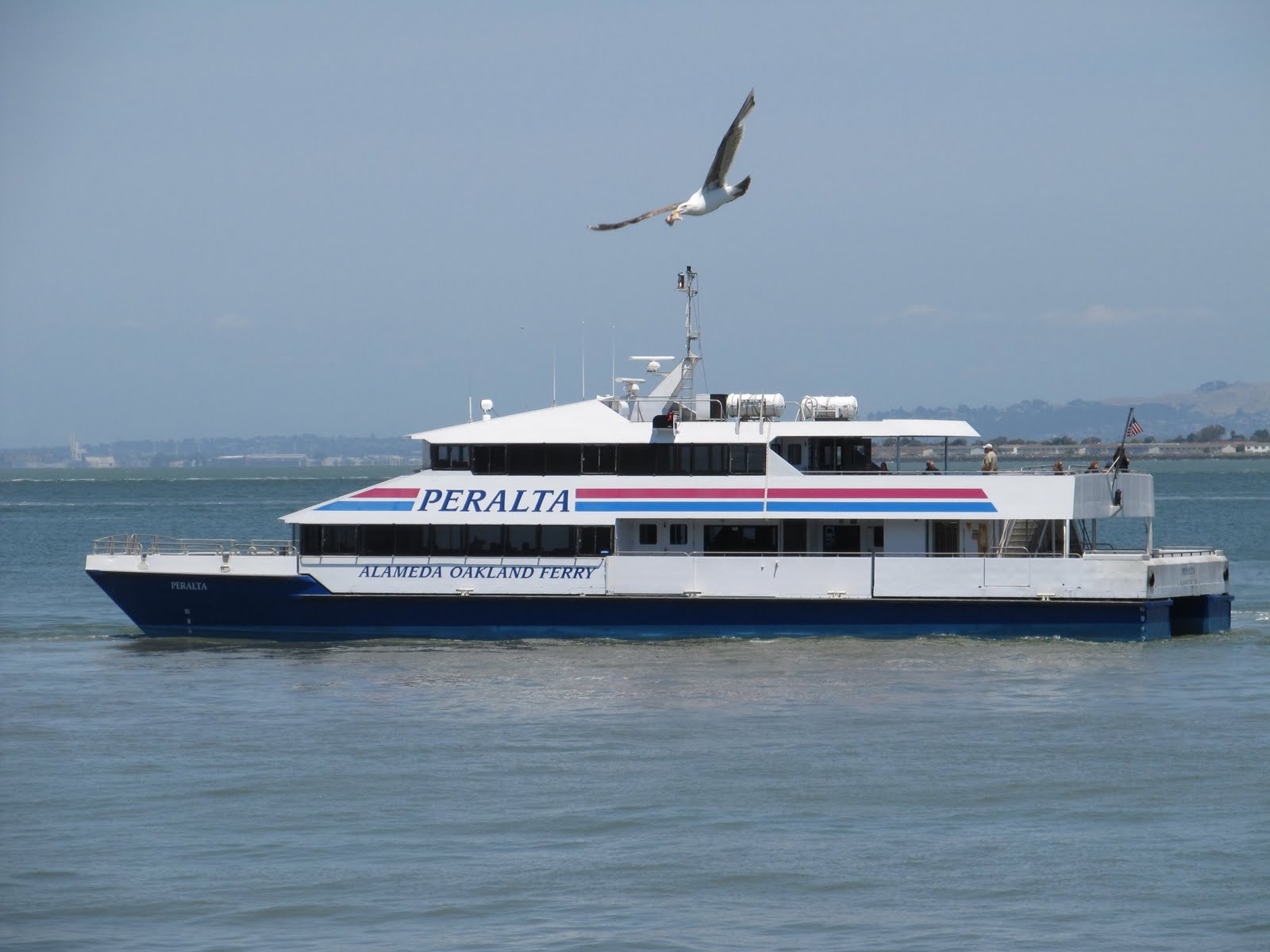
People have always needed to get from point A to point B; in the future, this will be no different. Our particular future, however, has to confront issues that were too distant to notice or just overlooked by our predecessors; a future where petroleum will be substantially more expensive than it is now, and perhaps also a future where attitudes have shifted a bit away from private vehicular transit and more toward public transit. It's the sort of future that we need to be planning for now - because not only does the future have a tendency of sneaking up on you when you least expect it, it does take time to build things. While the Brothers Ford in Toronto are doing a great job at making sure that this planning for the future does not happen, over here in Metro Vancouver the people in charge are thankfully more willing to look over the next hill.They'd better, because they have no choice. Metro Vancouver is going to be experiencing a hell of a lot of growth over the next few decades; current projections indicate that by 2040, Surrey will have more people than Vancouver, presaging a huge potential shift in the Lower Mainland's center of gravity. All those hundreds of thousands of people need to get around, right? It's too bad that in some respects, the current transit system in Metro Vancouver is better suited for 1991 than 2011.Enter the Fraser RiverBus Society. I encountered a link to a story about them in the Vancouver Sun the other day - through their spokesman Jeff Malmgren, they're advocating a potential solution to Metro's future transit woes in the form of the RiverBus, a four-ship passenger ferry system that would ply the Fraser River between Maple Ridge and Richmond, with stops in Vancouver, Burnaby, New West, Coquitlam, and Langley along the way. The idea is primarily that of an "inter-suburban" line; rather than providing an alternate connection between Vancouver and the outlying cities, it's intended as more of a way to get from one outer city to the other without having to go through Vancouver.I remember having an idea like this a little while ago, but in the context of relieving pressure on the Expo Line - it involved fast passenger ferries that would connect the Surrey waterfront, such as it is, with downtown Vancouver - but the distance involved made it seem a bit unlikely to me. By the same token, I'm not sure if the idea of a RiverBus is sound; it seems to me that it might be simpler, cheaper, and ultimately quicker to expand the infrastructure that already exists. MV Peralta, an Alameda/Oakland passenger ferry, underway in San Francisco Bay.
Sailboats aren't uncommon on Burrard Inlet, but they tend to be small; the sort of yachts and skiffs that can easily be kept in the marina until they're ready to go meet the waves. Big ships with big sails are a far less frequent sight, but I caught this one emerging from Coal Harbour over the weekend. While this vessel is probably far too small to be a true tall ship, its masts give it a sort of dominance that not many other ships on this part of the water can manifest.I can't tell what that flag is, either. That's the problem with so many British colonies and Commonwealth states using Red Ensigns - with the Union Flag in the canton and their own coat of arms in the fly, it's practically impossible to distinguish between them at a distance.  I, the copyright holder of this work, hereby release it under the Creative Commons Attribution-Non Commercial-Share Alike 3.0 Unported license.This means that you are free to Share (to copy, distribute and transmit the work) and to Remix (to adapt the work) under the following conditions: Attribution (you must attribute the work in the manner specified by the author or licensor, but not in any way that suggests that they endorse you or your use of the work), Noncommercial (you may not use this work for commercial purposes), and Share Alike (if you alter, transform, or build upon this work, you may distribute the resulting work only under the same or similar license to this one).
Most days, all you're going to see on the waters of Burrard Inlet are container ships, tugboats, personal pleasure craft, and one or two of the SeaBuses. Every once in a while, though, you'll find the stark lines of a warship there. HMCS Algonquin, one of Canada's three remaining Iroquois-class air defense destroyers, arrived at Canada Place in Vancouver a couple of days ago for the Canada Day festivities. She does look subtly meaner to my eyes than the Halifax-class frigates, even though all those VLS cells toward the bow only contain surface-to-air missiles - if Wikipedia is accurate, that is. I, the copyright holder of this work, hereby release it under the Creative Commons Attribution-Non Commercial-Share Alike 3.0 Unported license.This means that you are free to Share (to copy, distribute and transmit the work) and to Remix (to adapt the work) under the following conditions: Attribution (you must attribute the work in the manner specified by the author or licensor, but not in any way that suggests that they endorse you or your use of the work), Noncommercial (you may not use this work for commercial purposes), and Share Alike (if you alter, transform, or build upon this work, you may distribute the resulting work only under the same or similar license to this one).
You'll know it if you've ever looked at a Canadian dime: the Bluenose, the schooner that became a symbol of Nova Scotia and Canada eighty years ago. It's been sixty-five years since she sank in the Caribbean, but her legacy lives on with the Bluenose II, a replica of the original based in Lunenberg, originally built as a marketing stunt for a beer company - in other words, deeply Canadian.As a replica, Bluenose II was built out of wood - and the thing about wood is that it tends to degrade over time. So, since last summer Bluenose II has been in drydock undergoing a heavy rebuild to extend its life - but at the cost of putting much of the ship's original materials through a wood chipper, with practically the entire hull being rebuilt and only the masts, sails, and another one-fifth of the original materials remaining.The Globe and Mail ran a story about this yesterday. Its thrust is simple, and boots criticisms and complaints that seem to have been circulating in Nova Scotia for a while now; given the profundity of this refit, when all is said and done will that ship in Lunenberg still be the Blunose II, or just some new ship that happens to incorporate pieces of the Bluenose II?Of all the things I expected to encounter in the mainstream media, a real life example of the Ship of Theseus problem is not it. I can't find any photos of an actual sailing ship to illustrate this article, so this one of the side of a West Vancouver Transit bus will have to do. It's full of... ship-ly goodness.
So there I was, in Gastown at noon, when a loud, long horn sequence pierced the air. I didn't need long to figure out it was coming from the cruise ship terminal at Canada Place, but when I went outside I didn't expect to see the silhouette of Mickey Mouse on the funnels.It was the second Vancouver visit of the Disney Wonder, one of three cruise ships currently operated by the Disney Cruise Line, and you can find it there every Tuesday from 7 to 5 between now and September while it runs Alaska cruises. It's only the third cruise ship I've spotted so far in Burrard Inlet - but then, I wasn't looking very hard over the summer. Just the scale of it, though; that SeaBus in the distance is practically a raft next to it. I, the copyright holder of this work, hereby release it under the Creative Commons Attribution-Non Commercial-Share Alike 3.0 Unported license.This means that you are free to Share (to copy, distribute and transmit the work) and to Remix (to adapt the work) under the following conditions: Attribution (you must attribute the work in the manner specified by the author or licensor, but not in any way that suggests that they endorse you or your use of the work), Noncommercial (you may not use this work for commercial purposes), and Share Alike (if you alter, transform, or build upon this work, you may distribute the resulting work only under the same or similar license to this one).
The crossings of Burrard Inlet are key to the success of the North Shore cities; without them they'd be isolated from the rest of the country, effectively an island in the middle of what's already effectively an island. The ones I have the most experience with are the ones closest to downtown Vancouver - the Lions Gate Bridge and the SeaBus, the only radar-equipped public transit vehicle I've ever been on.Taken from the Vancouver-bound Burrard Pacific Breeze, here's a shot of the Lonsdale-bound Burrard Beaver passing between the Breeze and the Lions Gate Bridge. I, the copyright holder of this work, hereby release it under the Creative Commons Attribution-Non Commercial-Share Alike 3.0 Unported license.This means that you are free to Share (to copy, distribute and transmit the work) and to Remix (to adapt the work) under the following conditions: Attribution (you must attribute the work in the manner specified by the author or licensor, but not in any way that suggests that they endorse you or your use of the work), Noncommercial (you may not use this work for commercial purposes), and Share Alike (if you alter, transform, or build upon this work, you may distribute the resulting work only under the same or similar license to this one).